Every community experiences seasons.
There are seasons of growth, celebration, opportunity, and visible progress. There are also seasons of uncertainty, loss, financial strain, family pressure, disappointment, and waiting. Some seasons feel abundant. Others feel dry.
August often invites this kind of reflection. The year has moved beyond its beginning, summer is beginning to shift, and families, churches, leaders, and communities are looking toward what the final months may require. It is a natural time to ask whether we have enough strength, faith, and unity to carry one another through what comes next.
Dry seasons are not always visible from the outside.
A family may be smiling publicly while quietly carrying financial pressure. A young person may appear confident while struggling with uncertainty about school or the future. A community organization may continue serving others while facing limited resources of its own. A leader may continue encouraging everyone else while privately feeling exhausted.
Faith does not pretend these realities do not exist.
Faith gives us a way to move through them without surrendering hope.
For Living Abundantly Vision, Inc., abundant living is not simply about having more. It is about becoming a community in which people are strengthened spiritually, emotionally, relationally, and practically. It means creating environments where faith produces action, families receive support, leaders serve with purpose, and people recognize that difficult seasons do not have to become permanent identities. As Episode 2 of this August series, this article goes deeper into what it means to carry faith into challenging seasons and how communities can transform hardship into greater unity, resilience, and lasting impact.
Dry Seasons Test More Than Our Resources
When hardship enters a community, the first concern is often practical.
Is there enough food?
Can bills be paid?
Are young people receiving the support they need?
Are families safe?
Can programs continue operating?
These questions matter. Faith should never be used to ignore practical needs. But difficult seasons also test something deeper: what we believe about one another, about the future, and about God’s presence when circumstances become uncertain.
Fear can make people withdraw, compete, blame, or protect only themselves. Communities that once felt connected can become fragmented when pressure increases.
This is why spiritual resilience matters.
Faith reminds us that our present circumstances do not represent the totality of our future. It gives us courage to remain generous when resources feel limited, patient when answers are delayed, and committed to one another when circumstances become complicated.
In Scripture, wilderness seasons frequently became places of formation. They were uncomfortable, but they revealed dependence, character, leadership, and trust.
Our own dry seasons can do the same.
They can expose weaknesses in our systems. They can reveal which relationships are truly supportive. They can teach families to communicate more honestly. They can push leaders to become more creative and communities to become more collaborative.
Hardship is never something we should seek. But when it comes, we can choose to let it deepen our faith rather than destroy our hope.
Faith Becomes Strongest When It Moves Into Action
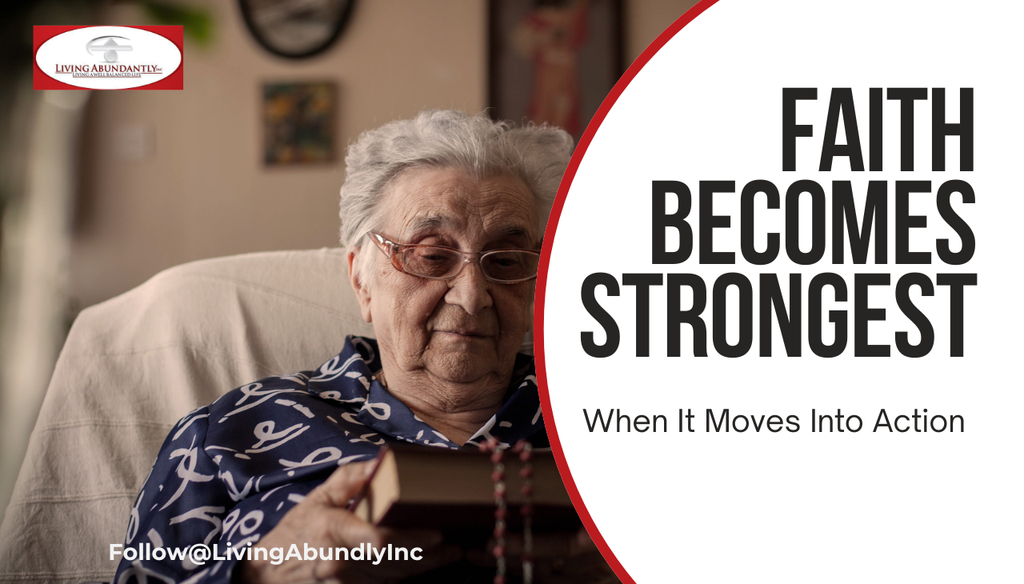
Faith is deeply personal, but it was never meant to remain private.
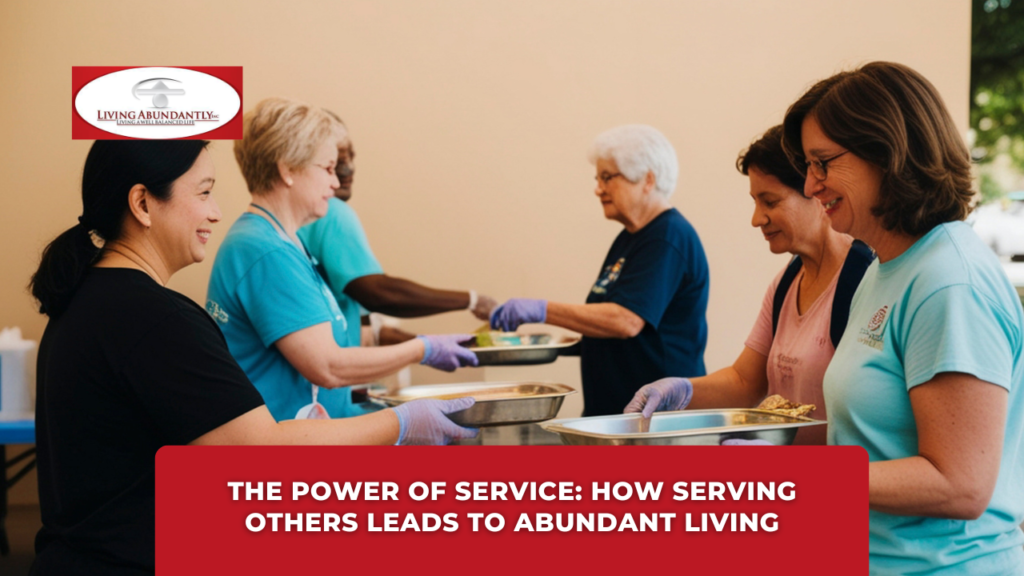
A faith-filled community does more than speak words of encouragement. It looks for practical ways to serve.
If a family is struggling, faith asks how we can help.
If a young person feels directionless, faith asks who can mentor them.
If an elderly neighbor feels isolated, faith asks who can visit.
If someone has lost employment, faith asks which skills, relationships, or opportunities can be shared.
This is where abundance begins to look different.
A community may not possess unlimited financial resources, but it may have knowledge, time, relationships, space, experience, encouragement, and people willing to serve.
These are resources too.
One family may have food to share.
Another person may have professional experience that can help someone improve a résumé or prepare for an interview.
A business owner may be able to mentor a young entrepreneur.
A church may have space that can host a tutoring program.
A retired teacher may be able to support children after school.
A young adult may know how to help an older neighbor use technology.
Abundance grows when people stop asking only, “What do I have?” and begin asking, “What can we build together?”
Faith becomes visible through service.
It turns compassion into action and concern into responsibility.
This is one reason community matters so deeply. None of us possesses every resource, answer, or skill. But when people bring what they have together, the capacity of the whole community becomes greater.
Strong Families Help Communities Survive Difficult Seasons
Communities are strengthened one household at a time.
When families have healthy communication, supportive relationships, spiritual grounding, and practical stability, they are better equipped to navigate uncertainty. When families become overwhelmed or disconnected, community challenges often become more difficult.
This does not mean every family must look the same.
Families are diverse. Some include two parents, single parents, grandparents, extended relatives, guardians, foster families, and chosen support systems. What matters is whether the people within those relationships are building environments of care, accountability, communication, and belonging.
During stressful seasons, family connection must become intentional.
Pressure can cause people to speak more harshly, withdraw emotionally, or make decisions without communicating. Children and young people often notice tension even when adults believe they are hiding it.
Healthy families create space for honest conversations.
What are we facing?
What do we need?
What can we adjust?
How can we support one another?
Where do we need help?
These conversations build trust.
Faith also gives families a shared place to return when circumstances feel unstable. Prayer, gratitude, reflection, worship, and service can become anchors that remind families they are not defined only by what is difficult.
Even simple practices matter.
Sharing a meal without distractions.
Checking in with each family member.
Praying together.
Celebrating small progress.
Discussing financial decisions honestly.
Making time for rest.
Encouraging young people to talk about their hopes and concerns.
Strong families are not families without problems. They are families that learn how to face problems together.
Leadership During Hard Seasons Requires Hope and Responsibility
Communities often look to leaders during uncertainty.
They look to pastors, parents, nonprofit leaders, teachers, business owners, mentors, elders, and public servants for direction.
But effective leadership during difficult seasons requires more than optimism.
People need leaders who can tell the truth about challenges while still creating a pathway toward hope.
False optimism says, “Everything is fine.”
Faith-filled leadership says, “This is difficult, but we are not powerless.”
That distinction matters.
Strong leaders acknowledge reality. They listen to what people are experiencing. They identify the most urgent needs. They communicate clearly about what can and cannot be done.
Then they help people move from concern toward coordinated action.
This may involve organizing volunteers, creating resource networks, strengthening youth programs, developing partnerships, supporting families, or connecting people to existing services.
Good leadership also protects against burnout.
A leader who believes they must personally solve every problem will eventually become exhausted. Sustainable leadership creates teams, shares responsibility, develops new leaders, and empowers others to contribute their gifts.
This is especially important for young people.
When youth are invited into service and leadership, communities are not merely preparing them for the future. They are recognizing that young people already have something valuable to contribute now.
A teenager can organize a service project.
A college student can mentor younger students.
A young adult can lead a digital campaign for a community initiative.
Leadership grows through participation.
Communities become stronger when responsibility is shared across generations.
Practical Ways to Move From Dry Season to Abundance
Moving toward abundance does not begin with pretending resources are unlimited. It begins with identifying what is available and stewarding it wisely.
1. Identify the needs around you
Begin by listening.
What are families experiencing?
What challenges are young people facing?
Where are elderly community members struggling?
What resources are difficult to access?
Avoid assuming you already know what people need. Ask questions and listen to the answers.
2. Map the resources already present
Create an inventory of community strengths.
Who has useful skills?
Which organizations are already serving?
What spaces are available?
Who can mentor?
Who can teach?
Which businesses may partner?
What resources can be shared?
Sometimes abundance is hidden because people have never connected the available resources.
3. Build relationships before emergencies happen
Strong communities are built before crisis arrives.
Connect churches, nonprofits, schools, businesses, families, healthcare providers, and community leaders. When trust already exists, collaboration becomes easier during difficult seasons.
4. Create small, practical service opportunities
Not every response needs to become a large program.
A tutoring session, food collection, mentorship circle, transportation network, family workshop, community cleanup, or job-readiness session can meet real needs.
Small acts, repeated consistently, create meaningful impact.
5. Strengthen spiritual and emotional support
People need more than material assistance.
Create spaces where people can talk, pray, receive encouragement, and feel connected. Loneliness and discouragement can make difficult seasons harder than they need to be.
6. Invest in young people
Youth should be included in community development, not treated only as recipients.
Give them opportunities to lead projects, express ideas, develop skills, and serve others. When young people recognize that they matter to their communities, they become more invested in strengthening them.
Reflective Questions
- Where is our community experiencing a dry season?
- Which needs have we noticed but not addressed?
- What resources are already present that we may be overlooking?
- Which families need stronger support?
- Who could benefit from mentorship or encouragement?
- Where could organizations collaborate instead of working separately?
- How are we involving young people in leadership and service?
- What would abundant living look like for our community this season?
Bringing It All Together
Every season changes.
The dry season does not remain forever.
But the goal is not simply to survive until circumstances improve. The deeper opportunity is to become stronger, wiser, more connected, and more faithful while moving through the season.
Communities become resilient when people refuse to face hardship alone.
Faith gives us the courage to believe that present limitations do not have to determine future possibilities. Family gives us a place of belonging. Service transforms compassion into action. Leadership creates direction. Community multiplies what individuals could never accomplish alone.
Abundance is not always immediate prosperity.
Sometimes abundance looks like a family receiving help before reaching a crisis.
Sometimes it looks like a young person finding a mentor.
Sometimes it looks like neighbors choosing cooperation over isolation.
Sometimes it looks like a leader admitting they need support.
Sometimes it looks like a community discovering that it already possesses more strength than it realized.
At Living Abundantly Vision, Inc., we believe abundant living is rooted in the whole person and strengthened through faith, relationships, opportunity, service, and shared responsibility.
As August moves us toward another season, this is an opportunity to examine how we are caring for one another.
Do not wait until every resource is available before beginning.
Bring what you have.
Offer your time.
Share your knowledge.
Encourage a family.
Mentor a young person.
Support a community initiative.
Pray with someone.
Build a partnership.
Take the next faithful step.
When communities choose faith over fear, service over isolation, and shared purpose over individual struggle, even dry seasons can become places where new strength begins to grow. And from that strength, abundance can rise.